


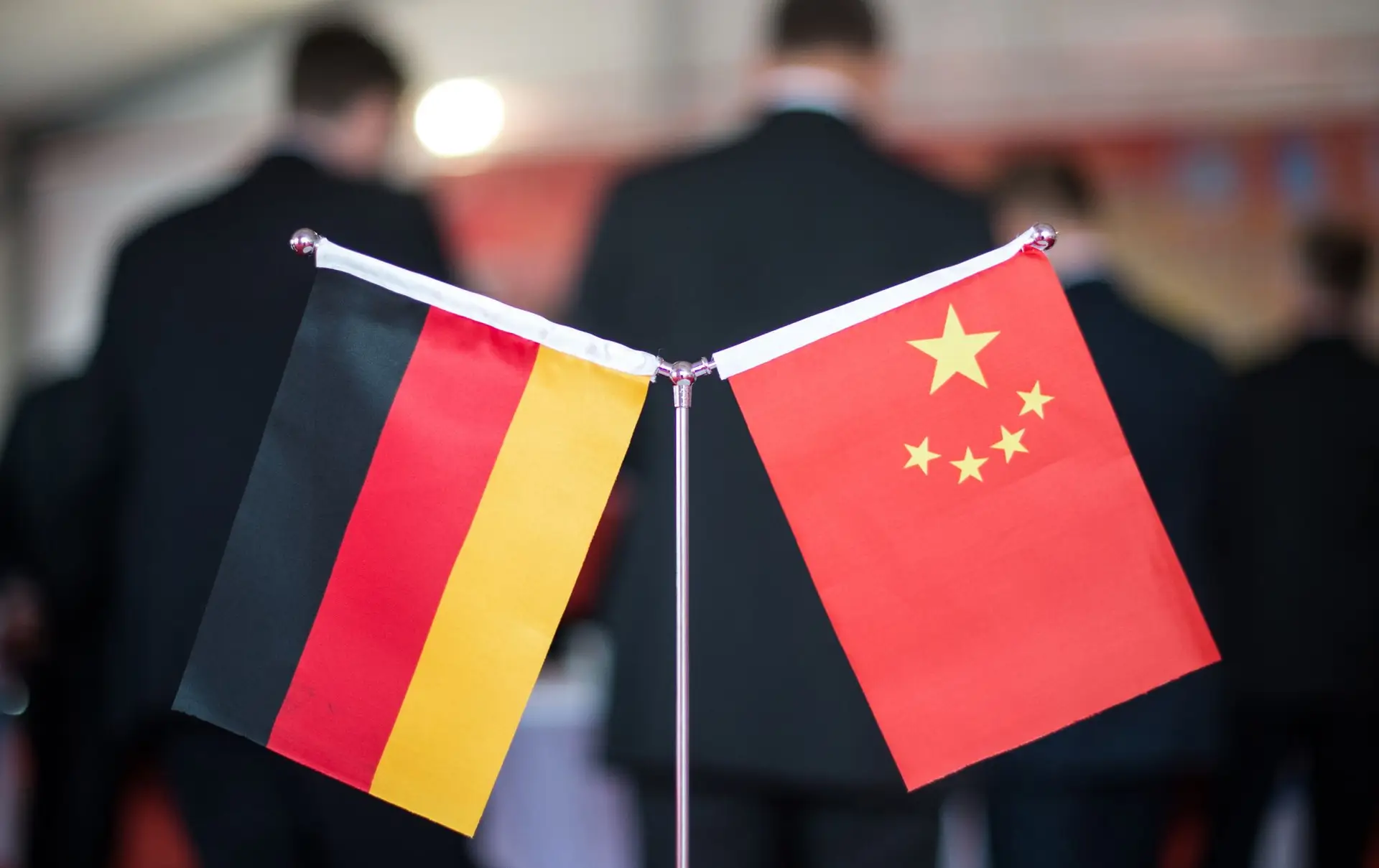
China has once again overtaken the United States as Germany’s most important trading partner.
In 2025, the volume of imports and exports in trade with the People’s Republic totalled €251.8 billion ($296.6 billion), according to calculations by the Federal Statistical Office released on Friday.
With an increase of 2.1%, China, which had already been Germany’s most important trading partner from 2016 to 2023, once again overtook the US, which was in first place in 2024.
German trade with the US was affected last year by the tariff dispute under President Donald Trump. Despite a decline of 5%, the US remained Germany’s second most important trading partner with foreign trade turnover of €240.5 billion.
Higher tariffs and Trump’s aggressive trade policy did not change the fact that, as in the previous 10 years, the US remained the most important single market for goods “Made in Germany” in 2025.
German companies sold goods worth €146.2 billion to the US, 9.4% less than a year earlier. There were significant losses (-17.8%) in cars and related parts.
France ranked second among Germany’s most important export destinations, followed by the Netherlands. China ranks only sixth in this list.
Chinese products have dominated imports to Germany since 2015. Last year, China was once again by far the most important supplier country for Germany, with imports worth €170.6 billion, up 8.8%, ahead of the Netherlands and the US.
The tariff dispute is also having an impact on Chinese exports, with China diverting goods to Europe, and thus also to the German market, because of US tariffs, economists say.
Economist Sebastian Dullien from the trade union-affiliated Böckler Foundation sees a trend.
“Higher trade barriers for Chinese deliveries to the US mean that these goods are also being diverted to Europe,” he said.
US producers, on the other hand, are benefiting from easier access to the EU market and have increased their exports to Germany by 2.7%.
“Protectionism there, structural imbalances here – this is not a comfortable environment for an export nation,” said Dirk Jandura, president of the Federal Wholesale and Foreign Trade Association (BGA).
“Our exports to China are declining significantly. This is not a temporary economic blip, it is a warning sign.”
We have to do our homework, but we also have to take risks seriously, he said. “We need to broaden our supply chains, tap into new markets and finally strengthen our competitiveness.”