


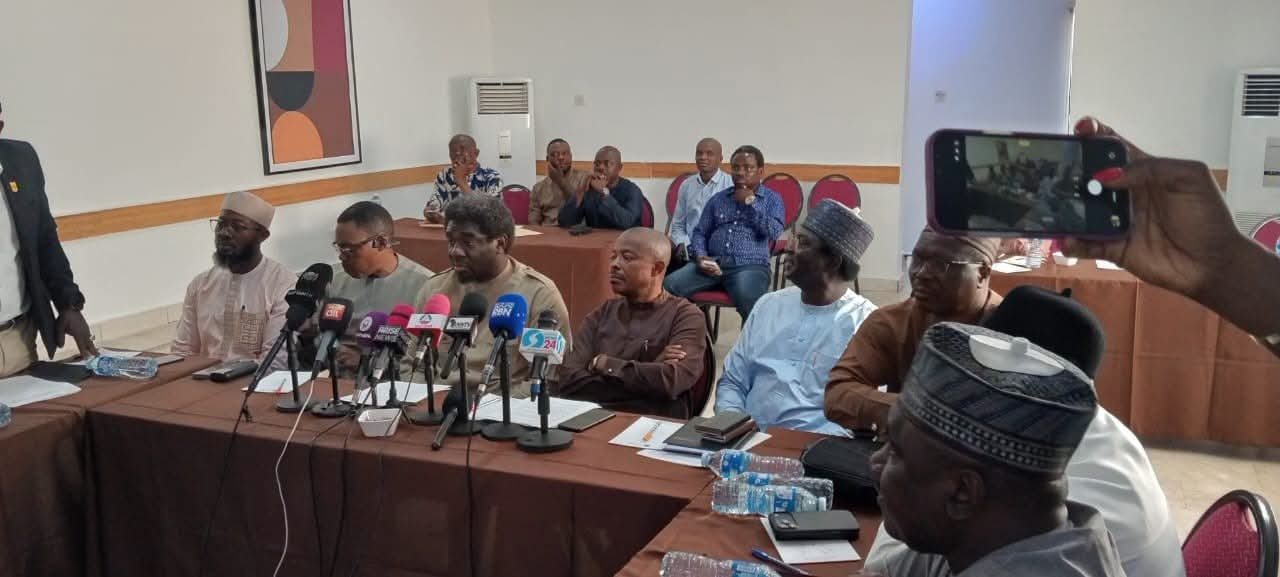
The Nigeria Labour Congress (NLC) and the Trade Union Congress of Nigeria (TUC) have resolved their differences following a reconciliation meeting in Abuja, pledging to strengthen cooperation in defending the interests of Nigerian workers.
The resolution comes after weeks of disagreement between the two major labour centres over the Federal Government’s approval of a ₦70,000 monthly transport allowance for public sector workers for six months, as well as broader demands for improved salaries and workers’ welfare.
The disagreement intensified after the Federal Government announced the transport allowance following negotiations involving the NLC and government representatives.
The TUC, led by its President, Comrade Festus Osifo, rejected the arrangement, arguing that a temporary transport allowance was inadequate and that workers required an immediate salary increase instead.
Osifo also accused the NLC, led by Comrade Joe Ajaero, of sidelining the TUC in negotiations with the Federal Government, insisting that neither labour centre should negotiate on behalf of the other without consultation.
However, Ajaero maintained that the NLC had the authority to negotiate independently, citing its numerical strength and the principle of majority representation in industrial relations.
The disagreement subsequently escalated into public exchanges between the two labour leaders, raising concerns about unity within the organised labour movement.
However, following a reconciliation meeting spearheaded by five former presidents of both labour organisations, the two unions announced that they had resolved their differences.
In a joint statement read by Ajaero and Osifo after the meeting, the labour centres reaffirmed that the unity of the Nigerian working class was far greater than any disagreement between their leaderships.
They stressed that their common struggle, shared history and collective responsibility to defend workers’ rights must not be sacrificed on the altar of misunderstandings or institutional differences.
Consequently, both leaderships unanimously agreed to work together in an atmosphere of mutual respect, trust and cooperation in defending the interests of Nigerian workers, pensioners and other vulnerable members of society.
They noted that the challenges confronting Nigerian workers remained enormous, stressing that the present circumstances required solidarity rather than division, unnecessary rivalry or distractions.
About The Author
