


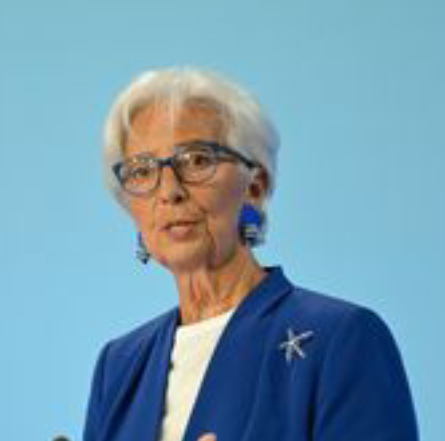
European Central Bank (ECB) President Christine Lagarde has announced her decision to step down on February 7, 2027, nine months before the end of her eight-year term.
The ECB confirmed the development on Thursday, October 29, 2026, stating that Lagarde had informed the bank’s Governing Council and European Council President António Costa of her decision.
Lagarde’s tenure was originally scheduled to end on October 31, 2027, but her early departure has triggered the process to select her successor.
In a statement, Costa praised her leadership, noting that she had guided the European Central Bank through major challenges, including the COVID-19 pandemic, the war in Ukraine, energy crises and inflationary pressures.
Costa also confirmed that the process of appointing a successor would begin immediately to ensure a smooth transition.
“To ensure a smooth transition to the next leadership of the ECB, the process for the appointment of her successor will be initiated today and will proceed without delay,” he said.
According to reports by Reuters and the Associated Press, Lagarde’s early exit will allow European Union leaders to choose a new central bank chief ahead of France’s presidential election scheduled for 2027.
The timing is politically significant because the election could influence discussions surrounding the appointment, although the ECB has not officially given a reason for her early departure.
Among the potential contenders for the position are former Dutch central bank governor Klaas Knot and Pablo Hernández de Cos, head of the Bank for International Settlements and former governor of Spain’s central bank.
The leadership transition also comes amid other expected changes at the ECB, including the scheduled departure of Chief Economist Philip Lane when his term ends in May 2027.
Lagarde, a former French finance minister and managing director of the International Monetary Fund, became the first woman to lead the European Central Bank when she assumed office in November 2019.
As ECB president, she has overseen monetary policy decisions affecting the 21 countries that use the euro, including interest-rate adjustments aimed at controlling inflation and maintaining price stability.
Her departure is expected to open a new chapter for the institution as European leaders prepare to determine its next leadership amid economic uncertainty and political developments across the region.
Sources: European Central Bank,
Share this content:
About The Author
