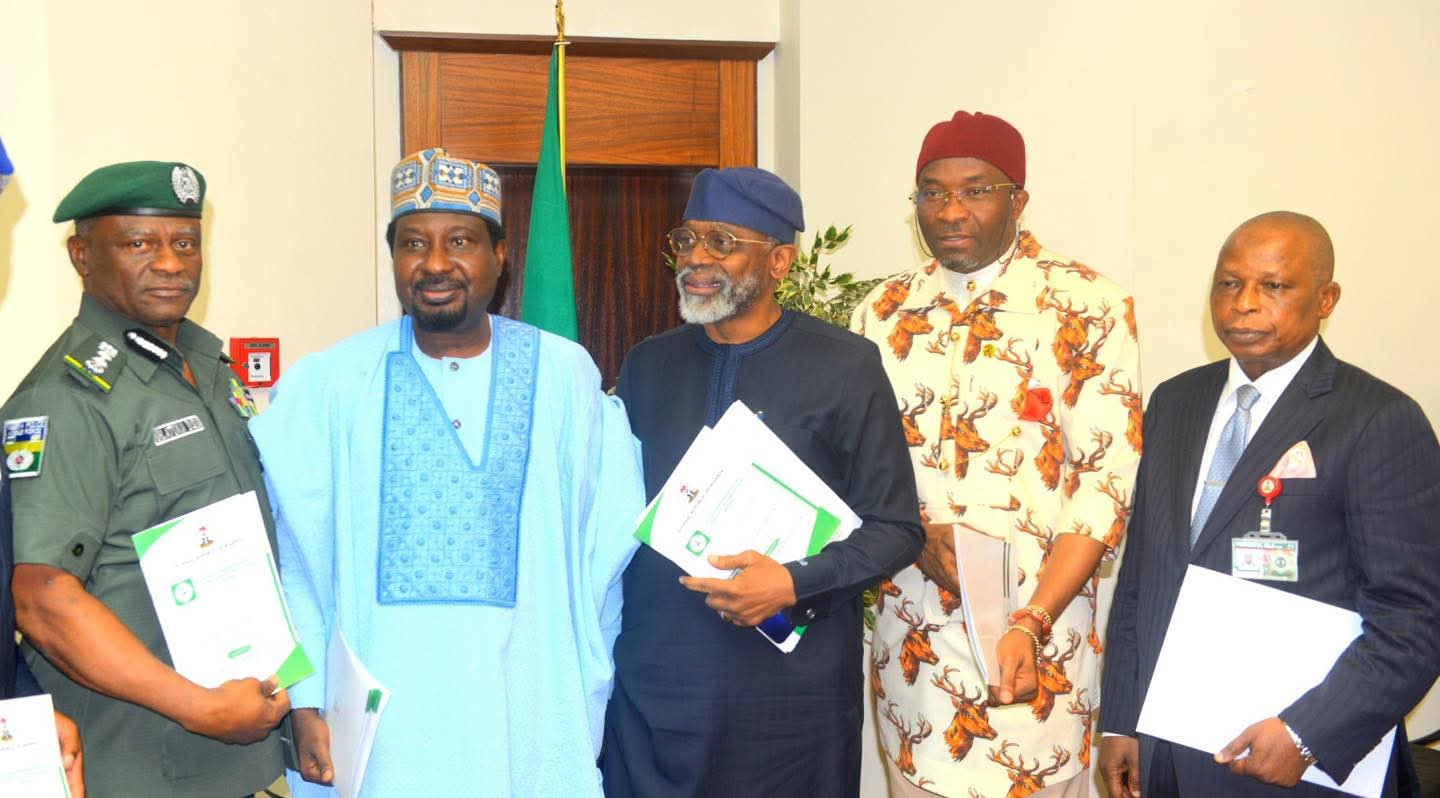
The Chief of Staff to the President, Hon. Femi Gbajabiamila, says the establishment of state police is a complex reform that cannot be achieved hastily, as significant progress has already been made toward its realization.
Gbajabiamila disclosed this on Thursday while briefing State House correspondents after a consultative meeting on the proposed state police framework held at the Presidential Villa, Abuja.
He noted that discussions on the initiative began several months ago following a directive from President Bola Ahmed Tinubu, involving consultations among the Executive, the National Assembly, and security stakeholders.
According to him, the process has now reached an advanced stage, with focus shifting to the proposed constitutional amendment required to give legal backing to state policing.
“We started deliberations in the last three or four months on how to go about the establishment of state police as directed by Mr President,” he said.
“Establishing state police is not something that you do with the snap of the fingers. There is a lot involved in terms of constitution and legalities, and thank God we have now gained a lot of traction.”
Gbajabiamila added that the next phase would involve constitutional amendments, followed by enabling legislation to define the operational framework.
“Right now, what we are looking at is the constitutional amendment itself, and then the enabling law would follow thereafter,” he explained.
He further said the discussions reflected broad consensus on the need for state police, stressing that the focus has moved beyond debate on its necessity to the design of a workable structure.
Gbajabiamila also stated that President Tinubu, who has consistently advocated for decentralised policing as part of efforts to strengthen national security, would be presented with a comprehensive report on the outcome of the consultations.
The proposed state police initiative is part of wider government efforts aimed at improving internal security, enhancing local intelligence gathering, and equipping sub-national governments to respond more effectively to security challenges across the country.
About The Author