


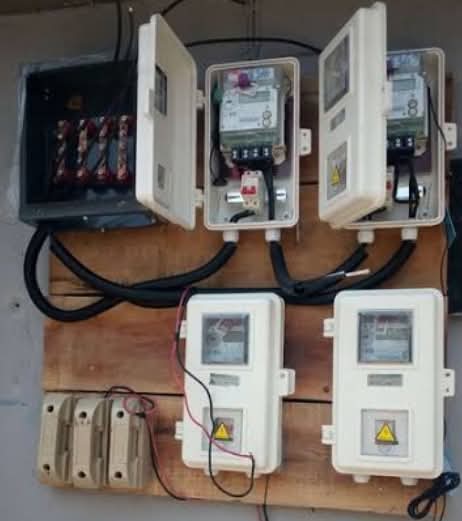
The Federal Competition and Consumer Protection Commission (FCCPC) has revealed that it stopped a planned replacement of obsolete prepaid electricity meters to protect consumers from being forced to pay for infrastructure failures beyond their control.
Executive Vice Chairman and Chief Executive Officer of the FCCPC, Tunji Bello, disclosed this on Monday during a stakeholder engagement on consumer protection and regulatory cooperation in Nigeria’s electricity sector held in Abuja.
Bello said the commission intervened after widespread concerns over the proposed replacement of obsolete Unistar prepaid meters used by customers of one of the electricity distribution companies.
According to him, many consumers feared they would be required to purchase new meters despite not being responsible for the equipment becoming obsolete. There were also concerns that delays in the replacement exercise could expose customers to estimated billing and possible disruption of electricity supply.
The FCCPC boss said the commission, in collaboration with the Nigerian Electricity Regulatory Commission (NERC) and the Nigerian Electricity Management Services Agency (NEMSA), convened a meeting with electricity distribution companies to address the issues.
He said the engagement resulted in the suspension of the planned replacement exercise until all regulatory requirements were met, a decision endorsed by both NERC and NEMSA.
Bello explained that the final resolution was based on NERC’s Order on the Structured Replacement of Faulty and Obsolete End-user Customer Meters, which guarantees that consumers will not pay for replacing obsolete meters, will not experience interruptions in electricity supply during the replacement process, and will not be subjected to estimated billing due to implementation delays.
He stressed that consumers should never be disadvantaged because electricity infrastructure had reached the end of its useful life through no fault of their own.
Bello also described the intervention as a demonstration of effective inter-agency collaboration, saying the best form of consumer protection comes from regulators working together rather than competing over institutional responsibilities.
He noted that consumer protection should not only focus on resolving complaints after they arise but also on preventing disputes before they occur through proactive regulation.
According to him, the Electricity Act 2023, which decentralised electricity regulation by allowing states to establish their own regulatory commissions, makes collaboration among regulators even more important.
Bello said electricity consumers expect seamless protection regardless of which agency has jurisdiction whenever issues such as power outages or billing disputes arise.
He added that the FCCPC respected NERC’s statutory mandate throughout the intervention, describing the approach as an example of modern regulatory governance built on cooperation, mutual respect and commitment to the public interest.
The FCCPC chief urged electricity distribution companies and other operators in the power sector to comply with regulatory obligations, promptly address consumer complaints and operate transparently to boost public confidence in Nigeria’s electricity market.
He further called on federal and state electricity regulators to work together to ensure that all electricity consumers across the country enjoy equal protection and fair treatment, regardless of their location.
Share this content:
About The Author

[5256]rbajee Official Login | বিকাশ দিয়ে অনলাইন ক্যাসিনো বোনাস পান,rbajee অ্যাপ ডাউনলোড করে সেরা অনলাইন ক্যাসিনো অভিজ্ঞতা নিন। এখানে স্লট গেমের নিয়ম বুঝে বিকাশ দিয়ে সহজে গেম খেলুন। আজই জয়েন করুন। visit: rbajee
[3621]Pokobet | Link Vào Mới Nhất – Cách Chơi Baccarat Online Uy Tín,Pokobet cung cấp đường dẫn truy cập không bị chặn, hỗ trợ tải app chính thức nhanh chóng và hướng dẫn nạp tiền qua Momo tiện lợi. Tham gia trải nghiệm ngay hôm nay! visit: pokobet
[978]sboslot99 | Login Resmi Link Alternatif & Slot Gacor Hari Ini,sboslot99 menyediakan akses login resmi dan link alternatif terbaru. Nikmati daftar situs casino terpercaya dengan kemudahan deposit via QRIS. Gabung sekarang juga! visit: sboslot99