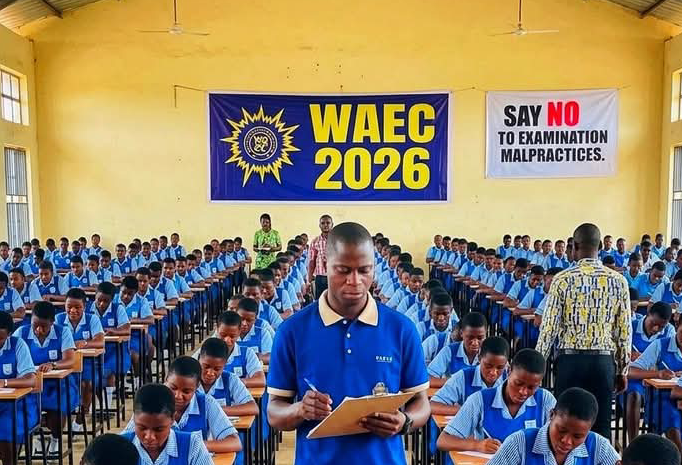
The West African Examinations Council says 1,959,636 candidates registered for the 2026 Computer-Based West African Senior School Certificate Examination the CB-WASSCE being held across 24,207 schools. Of those, 1,001,072 are female, edging past the 958,564 male candidates. Officials describe it as a sign of improving access and participation for girls in Nigerian secondary education.
The exam, which started on April 21 with practical papers, runs until June 19. It covers 37 subjects and 97 papers, with around 29,000 teachers drafted in as supervisors from across the country’s 36 states and the Federal Capital Territory.
WAEC’s Nigeria chief, Amos Josiah Dangut, told reporters in Lagos on Monday that the computer-based format was gaining firm ground following its successful first run in 2025. Schools in neighbouring countries that follow the WAEC curriculum have also joined this year’s sitting sign, he said, of growing regional confidence in the new system.
Examination malpractice has long been a stubborn challenge in Nigerian education, eroding trust in results and disadvantaging students who sit the tests honestly. WAEC says it is fighting back with technology.
This year, the council has introduced randomised question sequencing, meaning each candidate receives questions in a different order a measure designed to make it significantly harder to copy or share answers during the exam.
Dangut warned that students, teachers, and schools caught cheating would be punished, and singled out websites that sell exam questions for criminal prosecution. “WAEC, in collaboration with security agencies, will track and prosecute offenders,” he said.
Parts of Nigeria particularly in the north continue to face insecurity that disrupts schooling and public services. Dangut acknowledged the problem but said the council was working with police and state authorities to manage risks at examination centres.
Beyond the exam hall, WAEC has rolled out a range of digital tools including an online certificate platform, a candidate chatbot, a centre locator, and an e-learning portal aimed at modernising the experience for both students and schools.
Results will be out 45 days after the last paper, and digital certificates will be accessible online within 90 days changes that could speed up university applications for hundreds of thousands of school leavers.
For many of Nigeria’s nearly two million candidates, the results will determine access to higher education in one of Africa’s most competitive university admission systems.
About The Author