


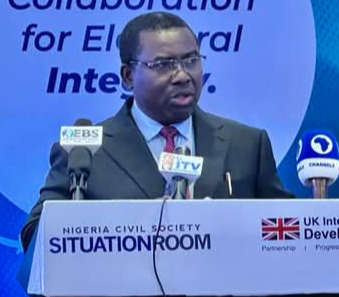
Nigeria’s electoral commission says it is working closely with the United Nations to strengthen the country’s democratic process ahead of the 2027 general elections.
The Chairman of the Independent National Electoral Commission (INEC), Prof Joash Amupitan, received the United Nations Resident and Humanitarian Coordinator in Nigeria, Mohamed Fall, at the commission’s headquarters in Abuja on Thursday.
Mr Fall congratulated Prof Amupitan on his appointment and praised INEC for what he described as the successful conduct of recent elections in the Federal Capital Territory (FCT).
“On behalf of the United Nations in Nigeria, we congratulate you for taking on this critical responsibility,” Mr Fall said, noting the scale and complexity of Nigeria’s democracy. He added that the UN would continue to support the country’s electoral process, with a focus on inclusivity and ensuring that no group is left behind.
The United Nations Development Programme (UNDP) Resident Representative, Elsie Attafuah, said the agency had a long-standing partnership with INEC, particularly in the areas of technology, innovation, youth engagement and voter education.
She said discussions were under way to assess the commission’s priority needs as preparations begin for 2027, including the possibility of a dedicated election support project. “If Nigeria succeeds, Africa advances,” she said.
Prof Amupitan said the meeting followed what he described as generally peaceful FCT Area Council elections, as well as recent by-elections in Kano and Rivers states.
He reiterated that INEC’s constitutional mandate covers elections for the president, vice-president, governors, deputy governors, members of the National Assembly and state houses of assembly.
The chairman identified public trust, voter education, insecurity and the spread of misinformation as major challenges facing election management bodies across Africa. He described deliberate disinformation as particularly damaging, warning that it could undermine constitutional institutions.
Prof Amupitan said INEC remained committed to inclusivity and gender equality, pointing to the commission’s Gender and Inclusivity Department and measures to support voters with disabilities. These include the provision of Braille materials for visually impaired voters and assistive devices for people with albinism, in line with Nigeria’s electoral and anti-discrimination laws.
On election technology, he said the commission was strengthening safeguards in its result management systems to prevent discrepancies and improve transparency. INEC is also reviewing the voters’ register, including removing the names of deceased persons, to enhance accuracy and integrity.
“We cannot afford to fail our people,” he said, adding that the commission’s goal was to ensure that each election improves on the last.
Prof Amupitan also said INEC was upgrading its data management systems in a bid to become the most reliable source of electoral data in the country, with enhanced digital tools and verifiable records of voting and election-day processes.
He said credible elections were essential to strengthening the link between democracy and development, arguing that Nigeria’s success would have wider implications for the African continent.
Share this content:
About The Author
